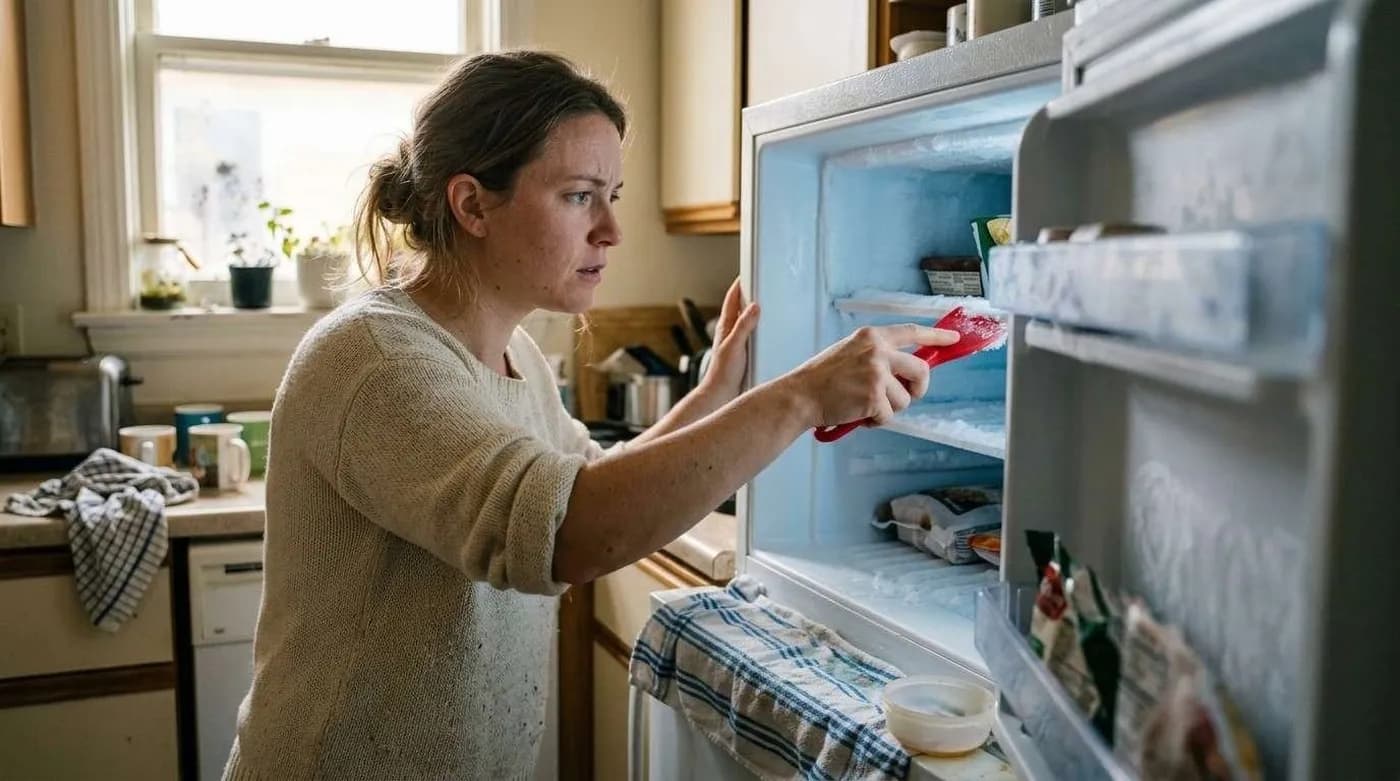
You open the freezer to grab something and find a thick layer of ice coating the walls, maybe even creeping over your food packages. A little frost here and there is normal, but when it starts taking over shelf space or coming back just days after you clear it, something’s actually wrong. This guide walks you through exactly why frost forms, what’s likely causing yours, and how to stop it from building up again.
How Frost Actually Forms Inside a Freezer
Before troubleshooting the cause, it helps to understand the basic process behind frost formation in the first place.
Why Moisture in the Air Is the Root Cause
Frost is simply frozen moisture. Any time warm, humid air enters your freezer, that moisture hits a cold surface and freezes almost instantly, which is the entire mechanism behind every frost problem you’ll ever see.
Why the Evaporator Coils Are Where Frost Starts First
The evaporator coils are the coldest surface inside your freezer, tucked behind the back wall or a rear panel. Frost naturally collects here first, since this is where the temperature drops low enough for moisture to freeze on contact.
How the Automatic Defrost Cycle Is Supposed to Keep It in Check
Most modern freezers run a brief defrost cycle several times a day, warming the coils just enough to melt that frost before it builds up. When this system works correctly, you never notice it happening at all.
Problems like this often give off small, early warning signs before they become obvious, which this list of signs your appliances are about to break down covers in more detail.
Is Your Frost Buildup Normal or a Real Problem?
Since a little frost is expected, it’s worth knowing exactly where normal ends and an actual problem begins.
A Light Dusting on Packages vs. a Solid Ice Layer
A thin, light dusting on food packages after a lot of door opening is nothing to worry about. A thick, solid layer across shelves or walls is a different story entirely.
How Fast the Buildup Is Reappearing After You Clear It
If you defrost the freezer and frost returns within just a few days, that’s a strong sign the underlying cause hasn’t actually been resolved.
Signs Cooling Performance Is Also Starting to Slip
If you’ve noticed food not staying as solidly frozen as it used to, alongside the frost, that combination points toward a problem that’s affecting more than just appearance. This pairing of symptoms often shows up in refrigerators too, covered in this guide on why your refrigerator is running constantly.
What Frost Location Tells You About the Cause
Where the frost is concentrated is one of the most useful clues you have for narrowing down the cause before touching anything.
Frost Concentrated Around the Door Edges
Frost clustered specifically around the door frame or edges almost always points to a sealing problem, where warm air is sneaking in through a gap.
Frost Spread Evenly Across Food and Packaging
A general, even dusting across everything inside usually points to frequent or prolonged door opening rather than a mechanical failure.
A Dense Sheet of Frost on the Back Wall
A thick, solid sheet specifically on the back interior wall often means frost has built up so heavily on the evaporator coils that it’s now reaching the wall itself, a sign the defrost cycle isn’t keeping up.
Top Causes of Freezer Frost Buildup
Once you’ve looked at where the frost is concentrated, these are the most common causes behind it.
A Worn, Torn, or Misaligned Door Gasket
The rubber gasket around the door is your main defense against warm air getting in. Once it cracks, flattens, or loses its grip, it lets humid air leak in continuously.
Frequent or Prolonged Door Opening
Every time the door opens, warm, moist air rushes in. Opening it often, or leaving it open longer than necessary, introduces more moisture than the defrost cycle can always keep up with.
A Door That’s Blocked From Closing Fully
A shifted bin, an ice bucket sitting slightly out of place, or a package pushed too far forward can all prevent the door from closing completely, even when it looks shut from the outside.
Overpacking the Freezer and Restricting Airflow
Cold air needs room to circulate. A tightly packed freezer blocks internal vents, which disrupts airflow and can contribute to frost collecting unevenly.
Storing Warm Food Before It Cools
Placing warm or hot food directly into the freezer introduces a burst of moisture and heat that the system has to work to remove, increasing the odds of frost forming nearby.
A Failing Defrost Heater, Thermostat, or Timer
If any part of the automatic defrost system stops working correctly, frost that should melt off on schedule simply keeps accumulating instead.
A Freezer That Isn’t Sitting Level
A freezer that isn’t level can prevent the door from swinging fully shut on its own, creating a small but persistent gap that lets warm air in over time.
How to Test What’s Actually Causing the Frost
A few quick checks help you confirm the likely cause before you start any repair work.
The Dollar Bill Test for Door Seal Integrity
Close the door on a dollar bill at a few different points around the frame, then pull it out. If it slides out with little resistance anywhere, the gasket has lost its grip.
Listening for Changes in Fan or Defrost Heater Sound
Pay attention to any new buzzing, clicking, or silence coming from the back of the freezer, since a change in these sounds often signals a defrost component starting to fail.
Watching Where New Frost Reappears First
After clearing the freezer, keep an eye on exactly where frost shows up again first. This confirms whether you’re dealing with a door issue or something happening deeper in the system.
Safe DIY Fixes to Try First
Several of the most common causes are simple enough to check and fix yourself.
Clean and Reseat the Door Gasket
Wipe the gasket down with warm, soapy water to remove any residue, then make sure it’s sitting flush against the frame all the way around.
Check for Items Blocking the Door From Closing
Do a quick walk-through of everything stored near the door to confirm nothing is preventing it from closing fully.
Reorganize the Freezer to Restore Airflow
Leave some breathing room between items rather than packing everything tightly against the walls and vents.
Performing a Full Manual Defrost the Right Way
Unplug the freezer, remove the food to a cooler, and let the ice melt naturally with towels down to catch the water. Avoid chipping at it with sharp tools, since that risks damaging the interior lining or coils.
When Frost Points to a Defrost System Failure
If the simple fixes don’t resolve it, these signs point toward a problem with the automatic defrost system itself.
A Defrost Timer or Control Board Stuck in the Cooling Phase
If the defrost cycle never actually triggers, the timer or control board responsible for scheduling it may be stuck, which means frost just keeps accumulating with no relief.
A Defrost Heater That Isn’t Triggering on Schedule
Even if the timer is working, a failed heater element means the melt cycle has nothing to actually warm the coils with, so frost keeps building regardless.
Unusual Fan Noise or Silence During the Cycle
A fan that’s grinding, rattling, or unusually silent during what should be an active cycle is worth paying attention to, the same way any new appliance noise deserves a closer look, covered in this rundown of sounds your appliances should never make.
A Drain That’s Freezing Over in Addition to the Frost
If you’re also noticing water pooling or ice forming near the drain area, that overlaps with a related issue worth understanding fully, covered in this guide on water leaking inside the fridge.
Why Murrieta Homes Add a Few Extra Factors
Local conditions here add a few extra wrinkles worth knowing about if you’re dealing with this in Southwest Riverside County.
Garage Freezers and Temperature Swings
Many homes in this area keep a chest or upright freezer in the garage, where daily temperature swings between a hot afternoon and a cooler evening can affect how the defrost cycle performs over time.
This connects to a broader pattern worth understanding, covered in this guide on how the California climate impacts your appliance lifespan.
How Low Humidity Changes What Heavy Frost Usually Means Here
Since this region’s air is relatively dry compared to more humid climates, heavy frost buildup is less likely to simply be a humidity issue and more likely points toward a gasket or defrost system problem specifically.
How Murrieta’s Dry Heat Accelerates Gasket Wear
The combination of heat and low humidity common here can dry out and crack rubber gaskets faster than in milder climates, which is worth factoring into how often you inspect the seal.
What Ignoring Frost Buildup Actually Costs You
A little extra frost might seem harmless, but letting it continue causes real, measurable problems over time.
Reduced Usable Storage Space
Thick frost eats into your actual storage capacity, sometimes significantly, leaving you with far less usable space than the freezer is supposed to offer.
Extra Strain on the Compressor and Higher Energy Use
A freezer working harder to compensate for frost-restricted airflow uses more energy than it should, a pattern that shows up in a higher electric bill over time, similar to what’s covered in this guide on why your electric bill is so high.
Accelerated Wear Leading to a Bigger Repair
The longer a defrost system issue goes unaddressed, the more strain it puts on surrounding components, which can turn an affordable repair into a more expensive one down the road. This ties into a broader theme worth understanding, covered in this guide on the average lifespan of major home appliances.
Repair Costs for Common Frost-Related Issues
Once you’ve identified the likely cause, cost becomes the next natural question. Here’s a general idea of what factors into pricing.
Cost to Replace a Door Gasket
Gasket replacement is typically one of the more affordable freezer repairs, mainly involving the cost of the part and straightforward labor.
Cost to Repair a Defrost Heater or Thermostat
These repairs cost a bit more than a gasket, since they involve accessing internal components behind the freezer’s rear panel.
Cost to Repair a Defrost Timer or Control Board
Timer and control board repairs tend to be more involved, since diagnosing the exact failure point requires more detailed testing.
When Repair Costs Signal It’s Time to Replace the Freezer
If your freezer is already older and facing multiple issues at once, it’s worth weighing repair costs against its remaining lifespan. This guide on whether it’s worth repairing your old appliance or replacing it can help you think through that decision.
How to Prevent Frost From Building Up Again
A handful of simple habits go a long way toward keeping frost from becoming a recurring problem.
Inspect and Clean the Gasket Monthly
A quick monthly check and wipe-down catches early signs of wear before they turn into a full seal failure.
Let Hot Food Cool Before You Store It
Giving food time to cool on the counter before freezing it reduces the burst of heat and moisture your freezer has to work to remove.
Avoid Leaving the Door Open Longer Than Necessary
Being mindful of how long the door stays open, especially during grocery unloading, helps limit how much warm air gets in at once.
Keep the Freezer Reasonably, Not Tightly, Packed
Leave enough space for air to move freely between items rather than packing everything in as tightly as possible.
When to Call a Professional Appliance Repair Technician
Some frost problems go beyond what’s practical or safe to handle yourself.
You’ve Worked Through the DIY Checks and Frost Keeps Returning
If you’ve checked the gasket, cleared any blockages, and performed a full manual defrost, but the frost keeps coming back, the cause is likely something that needs professional diagnosis.
The Defrost System Needs Disassembly to Properly Diagnose
Pinpointing whether the issue is the heater, thermostat, or control board usually requires opening up the back panel and testing each component individually, which isn’t always practical without the right tools and experience, a pattern explored in this breakdown of the hidden costs of DIY appliance repair.
You’re Not Confident Working Near Electrical Defrost Components
Defrost heaters and related wiring involve electrical components you shouldn’t handle unless you’re genuinely comfortable doing so. If you’d rather have someone experienced take a look, reach out to our team and we can help you figure out what’s actually going on.
A freezer covered in frost isn’t a lost cause, and it’s rarely a mystery once you know where to look. Start with the door seal and your own habits, since those resolve a large share of cases on their own. If the problem continues after that, it’s a clear sign the defrost system needs a closer look, and catching it early keeps a manageable repair from turning into a bigger one.
The team at Appliance Repair Murrieta has helped homeowners across the area track down everything from a simple worn gasket to a failing defrost heater, so you don’t have to keep chipping away at that ice wall on your own.